Wednesday, 19 January 2011

Zambia and Malawi: Wowee!

We crossed over into Zambia and went to see Victoria Falls. They are the longest falls in the world at 1.8km long and were really impressive and beautiful, not commercialized like Niagara Falls. We were able to jump from rock to rock out into the Zambezi to dip our feet into the river while eating our lunch, maybe 30metres from where it poured over the falls.

We were really impressed with the number of bicycles in Zambia – it is the most common form of transportation, which means lots of thumbs up and bell ringing from the locals and very little motorized traffic on the roads. People carry so much on their bicycles, including enormous stacks of wood, corn, coal, and even other people. Lots of the back racks have built in cushions so that people can use their bicycles as taxis.

We went into another national park and game reserve, called South Luangwa, and had lots of really close encounters with wildlife, mostly from the safety of a truck. We went on an evening drive, and saw more lions (stalking a baby hippo), a leopard, spotted hyena, and lots of other incredible animals. The campsite we stayed in had platforms up in the trees for the tents, because elephants and hippos regularly wandered through camp.


From Zambia, we crossed over into Malawi and are now cycling north up the lake. People here are very friendly and every kid (and many adults) calls out to us as we cycle by – mostly saying “Muzungu”, which means white person. There are not a lot of white Malawians, so we are a bit of a spectacle. Malawi was a British “protectorate” before independence but not many colonists lived here. Livingstone did a bunch of exploring around here, looking for the source of the Nile, and it was near where we are now that Stanley found him and uttered the famous, “Livingstone, I presume?”.

We can’t really stop to stretch, eat, pee, or buy food (all important things to do while on a cycle tour) without getting quite a lot of attention. We stopped for lunch one day in the most remote stretch of road we could find, and before we knew it, we were surrounded by more than two dozen people. It is nice to get to meet the locals and chat, as usually at least one person speaks some English and translates for us. In every country/region, we learn at least how to say “hi, how are you?”, “thank you”, and a few other useful phrases, which always surprises (and, I like to think, impresses, people). We certainly get a lot of big smiles from people when we speak their languages.

We have been buying lots of food along the roadsides, which is delicious and really fresh. We made fish/ mango curry one night, on locally grown rice, which was delicious. Nelson's favourite snacks are these cookies and crackers we are finding everywhere, though.


Thursday, 6 January 2011

A Special Cameo

Hi all. Normally, this blog is Lynda's domain but she has agreed to let me make a cameo appearance to recount my version of the dog chase mentioned in her last blog posting. This is straight from the journal I have been keeping of our travels and describes the incident from my perspective:

...The next town was Motopi which was still another 50km or so which meant we got hit hard by the sun. Lynda was really feeling it and at one point I even offered to tow her with a small piece of cord I had. Our pace slowed considerably, that is until we encountered a wiley dog and his canine companions. As soon as they noticed us they started barking and running after us. This was to be our first dreaded encounter with potentially rabid dogs that we had read and heard so much about in Africa (we decided to skip the rabies shots back home mostly due to the exhorbitant cost - $1,200 for both of us!) Only one of the dogs, an exceptionally vicious and vocal one who was spotted and scraggly looking, kind of like a hyena, continued on with the chase; the rest fell behind. I had barely noticed them before I heard Lynda yell, "Oh shit!" and watched her kick into high gear. Before I could blink her legs were a spinning ball of adrenaline charged terror as she sped off ahead of me. She dropped into the aerobar position, her body and bicycle unified, slicing through the wind like the blade of a focused and determined ninja; a 'Lynja' if you will. She had left me to fend off the malicious mutt as by now she was approaching light speed. My salt-encrusted, tired legs could not match the cadence nor the determination of her legs - two powerful pistons propelling her away from the dog and towards safety. The persistent little bastard surprised me with it's stamina! Just as I thought it was starting to fall back it seemed to get a second wind and jumped into overdrive. That was when I yelled, "Keep going!!" Lynda charged on showing no signs of slowing down, in fact, she was still gaining speed! An incredible feat considering just a minute ago she was on the verge of collapse and resembled a lethargic sloth riding a bicycle during a heat-induced coma.

Finally, the dog could run no further and gave up his chase. He stayed in the middle of the road watching us as we sped away, probably annoyed that he missed out on this blue moon opportunity to take down two bicycle tourers on this own turf. I kept looking back to see if he was still pursuing us. It was a while before Lynja's steely-eyed forward gaze left the dashed white line ahead of her and peered over her shoulder. By the time we had put in a large enough safety margin between us and the dog we eased off on the pedals and both had a good laugh about it. "I didn't know I had it in me!" she said. "I didn't either!!" I answered back in disbelief.

Ten minutes later we got chased by another dog but ever since those two incidents, the dogs have been much nicer and Lynda has gotten way smarter about having her pepper spray handy for future dog encounters. "I'll spray you! I mean it! I'll f*cking spray you!" I believe were her exact words to the next dog who attempted a chase. Miraculously, he must have sensed her seriousness because the damned thing backed off as soon as she said it! Look out dogs, there's a new boss in town and she goes by the name of Lynja!


Here in Africa, they don't use junkyard dogs, they use junkyard lions! This was taken at the gates to an auto scrap yard. Hopefully we don't run into any of these!

Sunday, 2 January 2011

Happy New Year from Namibia! Biking through wild animal country

We fell asleep by 8pm New Years Eve to the sounds of hippos braying in the river, but celebrated at 10am the next morning (midnight in BC). We have biked up the west side of the Okavango delta, and east through the Caprivi strip in Namibia now, and are later today heading out to a little island where the Zambezi and Chobe rivers come together, right next to where the borders of Namibia, Botswana, Zimbabwe and Zambia meet.

Yesterday was the first day that we passed through a national park and weren't allowed to ride through, so we had to put our bicycles in the back of a pickup truck through the park. Every other game reserve or park, the folks at the gate all say "aren't you afraid of wild animals?" but let us go anyways. We have heard that lions and other cats don't really hunt during the day. The one time we had to fix a flat inside a park (there are a lot of thorns here), I was definitely looking over my shoulder, though! There is definite incentive for me to keep up with Nelson, too. I've seen enough nature documentaries to know that it is the smaller, weaker, slower one straggling at the back that gets eaten first.

We did see two elephants from our bicycles one day, about 30m away. While we were stopped and taking pictures, a park warden drove up. Our conversation went something like this and, in the end, it was still a little unclear to me whether or not this was an unsafe distance.

Park Ranger: "Hi, how are you?"
Me: "Good, how are you?"
PR: "Are you okay with these animals here?"
Me: "I think so. Are we okay with these animals here?"
[pause]
Me again: "Is it safe?"
PR: "Is it safe?"
Me: "Are we too close?"
PR: "Are you too close?"
Me: "I don't know. Is it okay that we're here?"
PR: "Is it okay that you're here?"
Me: "I don't know. Is it?"
PR: "Is it?"
[pause]
PR again: "How fast can you go on those bicycles?"


We haven't had to try to outrun any wild animals yet, but I did learn how fast we could go when a mean dog came running out of a yard one day barking like he wanted to eat us. Nelson described my legs as "a spinning ball of adrenaline charged terror". I couldn't believe that I had outrun both the dog and Nelson until I realized later that Nelson had slowed down to put himself between me and the dog. Who says feminism killed chivalry?

Besides the elephants and the animals we saw in Pilanesberg, we have now also seen warthogs (with their babies that are so ugly, they're cute), springbok, klipspringer, water buffalo, turtles, enormous ant hills, lizards, donkeys, monkeys and their babies, baboons (in the middle of the road), a baby crocodile, and lots of funky birds.

I also learned that not only does my name mean something in Spanish, it also means something in Zulu! It signifies "to wait" and is quite a common name. Anyone who has ever had to wait for me, which is pretty much all of you, might find this quite fitting.

I find myself making profound statements on a fairly regular basis, like "Wow, it's really sandy here in the Kalahari desert", or "Man, Africa is hot in the summer!". In order to beat the heat, we are getting up at 4am and starting cycling at 5:30am, at first light. We have usually gone 50km by ~8:30am and 100km before noon. It is the 100+ days that are hard, because we end up riding in the afternoon. Luckily, it is the rainy season, so it is often cloudy in the afternoon which makes it bearable. Botswana and Namibia are also very flat, which is nice after hilly South Africa. The road surfaces have all been paved and smooth, except a few sandy access roads to lodges.

This last week of cycling has definitely been our favourite so far. People seem happy and busy and generally don't pay much attention to us, except to give big smiles and waves from the fields. We've seen lots of people using oxen to plow their fields and bent over doing farmwork. It looks like really hard work and puts what we're doing into perspective - it may seem hard at times, but it is entirely by choice and we can stop whenever we want and have access to luxuries on a regular basis. Most of the "camping" here is on the sites of posh lodges, so we have access to the swimming pool, showers, restaurant, etc. Several nights now, though, we haven't been able to make it to the next town with established accommodation, and are hesitant to wild camp because of the animals, so we have camped at the local police station, which has been really nice. We always meet lots of nice men and women who work there, as well as from the town.

Kilometers to date: 1663

We are loving the reaction that we get from people when we tell them where we've come from and where we're going. I wish we had on film all the times people said that what we're doing is impossible! I guess they don't know about possibilism.

Thursday, 23 December 2010

Merry Christmas from Botswana!

Just a short note to say Merry Christmas to everyone at home. We are in Botswana, near the Okavango delta. If anyone needs a last minute gift idea, we would encourage you to think about donating on someone's behalf to World Bicycle Relief, which provides bicycles to children in Africa so they can get to school: http://www.worldbicyclerelief.org/

Here is some info on the program:

Bicycles for Educational Empowerment Program
In June 2009, we launched The Bicycles for Educational Empowerment Program, an innovative project that is providing 50,000 bicycles to improve rural Zambian children's access to education. These children are especially at risk for extreme poverty and high HIV/ AIDS infection rates; safe, reliable transportation to school will enable them to have better health and economic outcomes as a result of completing their secondary education. More than 7,000 bicycles have been distributed to date, and initial reports indicate dramatically increased school attendance.

Expansion to Kenya and Zimbabwe
In 2009, World Bicycle Relief began expanding operations in Zimbabwe and Kenya in response to growing demand for a higher quality bicycle and comprehensive service program. In less than a year, we have sold more than 3,000 bicycles to organizations such as the World Health Organization, Catholic Relief Services and Care International. We are committed to providing the highest quality service and to working with organizations to solve their transportation needs.

FUTURE

World Bicycle Relief will continue to work with NGOs and community based organizations to respond to crisis situations where simple, sustainable transportation will improve the health, education and economic situation of people in need. We will meet these urgent transportation needs with the manufacture and distribution of bicycles for areas of the world in crisis. We have begun plans with World Vision and other NGOs to provide comprehensive bicycle programs as part of economic development and relief efforts in Kenya, Zimbabwe, Mozambique, Malawi, Tanzania, Kenya, Uganda, Botswana and Lesotho.

Tuesday, 14 December 2010

Biking begins! And amazing African animals

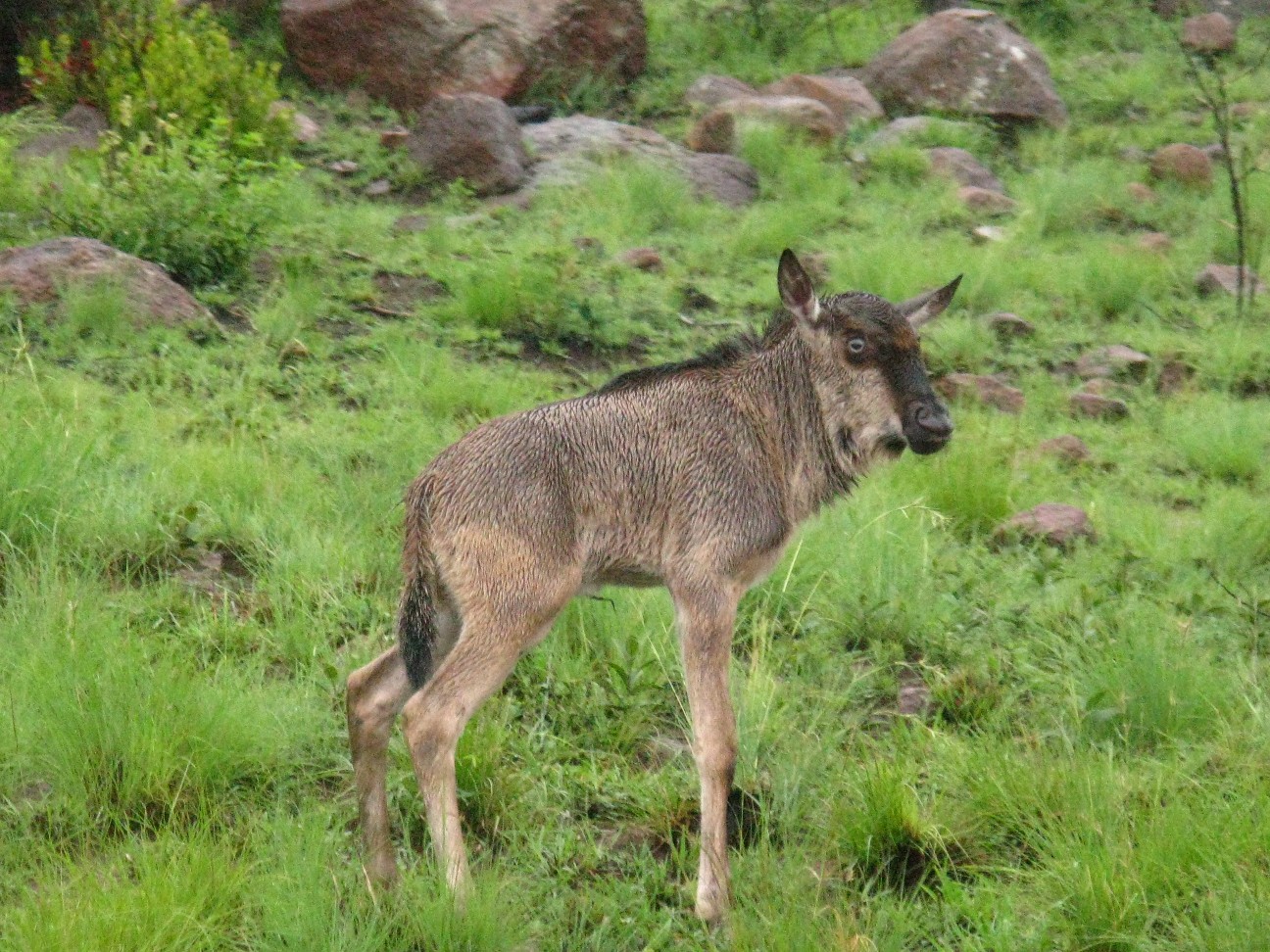
Two days ago, we zeroed our odometers, put everything in our panniers, and hit the road north out of Joburg. Yesterday we arrived in Rustenberg, and today took a tour of the Pilanesberg National Park. You aren't allowed to ride bicycles in the park, or even get out of your vehicle, and we learned why when we saw three lions ripping apart an animal they had just killed. It was really spectacular to watch in real life. We also saw elephants, impalas, wildebeest and their new babies (some still with umbilical cords attached), a jackal, guinea fowl, giraffes (my personal favourite), zebras, and hippos. It was really mindblowing to see all these animals I'd only ever seen images of, all in the same place, and so close to us!
The other highlight of our trip so far, though it shouldn't really surprise me anymore, is just how nice and generous people have been to us - when you're on your bicycle, people just really want to help you out: with information, places to camp/stay, and food... so much food! We have been introduced to many tasty South African delicacies - bilatong (like beef jerky), pannakoeken (Afrikaan crepes), and one generous camping neighbour gave us an entire coil of wild kudu (an African antelope) sausages.


Saturday, 11 December 2010

Soweto and apartheid

We´ve been in Johannesburg now for three days, and learned a bit about South Africa. We visited the Apartheid Museum (their motto is "where apartheid belongs") and headed out to Soweto. If you haven´t heard of Soweto, it is short for "south west township" and is where millions of black South Africans were forcibly moved to during apartheid. If they wanted to travel into Joburg (which most of them had to, for work) they had to carry an identity card and they had permission to travel only during certain hours and days. This was only one tiny piece of a larger picture of keeping different races seperate (apartheid literally means "apart-hood" in Afrikaans), providing many more privileges to white folks, and literally treating blacks as though they were not people. I know this type of history is not unique to South Africa but what shocks me is how recently this was happening - up until the early nineties, you may remember. I know that I had heard about apartheid then and watched "artists against apartheid" rock concerts and even boycotted my favourite soap brand because it supported apartheid according to a friend that was studying international relations, but it all seems so much more real being here and hard to understand what took the international community so long to get outraged.

This is a famous photo of a young schoolboy who was shot in the back by police (along with hundreds of others) during a protest by students in Soweto in 1976. We visited the scene of this incident, as well as one of the places that Nelson Mandela lived in the township. I have started reading his autobiography (thanks Rob and Amy!).

We don´t have any of our own pictures because we were warned not to take our camera with us, as it was likely to get stolen. We were also told by many people that Soweto was very dangerous, as was going downtown, especially in the shared taxis that the black people use, which we did and had a wonderful experience. We´ve decided that fear can be used to keep different groups of people apart as effectively as legislation and walls do and that is important to think about who the information is coming from. Fortunately, we have been staying with and befriended by some really amazing guys who were brave enough, as white people, to take the shared taxis and go to Soweto and knew that they were as safe as any other city. This one neighbourhood in Soweto, near the Regina Mundi churce, which served as a refuge for many activists, was the most peaceful and friendly place I´ve been to so far in South Africa.

Things have gotten a lot better in South Africa, but almost everyone I´ve met agrees that there is still a long way to go. I guess in the same way that the US electing a black president is a major step forward, but doesn´t mean that racism has suddenly vanished in north america. There are images of Barack Obama here alongside Nelson Mandela, Desmond Tutu, and other heroes of the people. Suddenly it doesn´t seem as bad to be mistaken for American - although I did still put Canadian flag handlebar tape on my bike!

We ride north tomorrow towards Botswana...

Friday, 3 December 2010

Africa bound!

We're off tomorrow for a cycling trip in South and East Africa. We land in Johannesburg, and fly out of Dar Es Salaam 11 weeks later, with more kilometres in between than we can possibly cycle, so we already know we will be making use of a few trains, trucks, busses, boats, or whatever other forms of transportation present themselves to us.

How did you decide where to cycle in Africa? This question has been asked of us a few times.
Well, we looked at some maps and dreamt a bit. Then we used the internet to see if anyone else has done anything like this. We found the website of Amaya and Eric, who have been cycling the world for years, and have over 85,000 km under their bike tires. They have a great article posted debunking some of the myths about the continent: www.worldbiking.info/resources/Top_Ten_Myths_Cycling_Africa_Bike_Touring_Resources.html Coincidentally, they are currently in Argentina and cycling some of the same places that Chris and I went.

We asked them about their favourite places in Africa, then planned a route going through many of them, doing a lot of reading of websites and guidebooks. You can see our potential route in the two maps here. The google map shows more details, but it makes it look like we are biking through the Congo, which is not true - I didn't know how to make google let us take a boat up the lake between Tanzania and the Congo, or a boat across Lake Victoria, both of which are good possibilities.

How do you prepare for such a trip? is another question we've been asked. Besides the research and buying our flights, most of the work has been in getting vaccinations and medications and getting our bikes ready.

I am bringing my trusty bike, protagonist of earlier adventures in this blog, who now has a name: Mo (after its new moustache handlebar - not to be confused with Nelson's handlebar moustache). Nelson didn't have a bike that would be appropriate, so we contacted Kona who does wonderful work supporting the use of bicycles in Africa through their AfricaBikes program: www.konaafricabike.com . They gave Nelson a great deal on a new bike, for which we are very grateful. More at: konaworld.com

We also have the good fortune of being friends with the Bike Doctor in Vancouver, who let us use his bike shop and gave us tons of advice and help, plus a skookum deal on everything we needed. Thanks Pol! Please see: www.thebikedr.com

How do you take three months off to do a trip like this? is probably the question we've been asked the most, though. What can I say? We are very fortunate to work with and for people who understand the importance of doing stuff like this. As for affording it, Eric and Amaya probably say it best in their article about financing a world biking tour: http://www.worldbiking.info/resources/Financing-Bike-Tours.html Not buying a vehicle when we moved to Nelson was certainly a key ingredient, plus lots of DIY (do-it-yourself) fun.